Restaurant owners overspend on social ads to reach strangers and underspend on the list of people who already came in once. Email and SMS marketing for a trivia night is the highest-ROI promotion channel for one reason: the list is people who liked your venue enough to give you their contact info. Convincing them to come back next Tuesday is a much shorter ladder than convincing a stranger to come at all.
This is the playbook: tools, list-building, what to send, what not to send, and the templates that work.
Tools: Klaviyo, Mailchimp, and the SMS layer
Three tool stacks cover 95% of restaurant trivia-night marketing. Pick one and run it; the differences matter less than execution.
- Klaviyo + Klaviyo SMS: the strongest single platform for restaurants under 100 seats. Email and SMS in one tool, segmentation that's actually usable, and templated automations that handle most of the work. Pricing scales with list size, but a 2,000-contact list runs roughly $45-$60/month all-in.
- Mailchimp + a separate SMS tool (Attentive, EZ Texting, or SimpleTexting): works fine, lower learning curve, but the segmentation between email and SMS is harder to keep aligned. Best for owners who already use Mailchimp.
- Toast Marketing or Square Marketing (POS-native): if your POS is one of these, the built-in marketing tool is the path of least resistance. Less powerful but auto-builds the list from card data and no separate signup required.
Whichever tool you pick, the difference between an open rate of 12% and an open rate of 32% is not the platform. It's whether you actually segment, write subject lines that feel human, and stop sending generic newsletter content nobody asked for.
SMS open rates are the highest channel you'll ever run
Restaurant SMS marketing has historically been underused because owners worry about being intrusive. The data does not support the worry. SMS open rates run 90-98% (versus email at 18-30% in restaurants), and the unsubscribe rate on a properly run trivia-night SMS list typically sits below 1.5% per send.
| Channel | Open rate | Click rate | Best use for trivia |
|---|---|---|---|
| Email (general newsletter) | 18-22% | 2-4% | Weekly schedule, events |
| Email (segmented trivia regulars) | 32-45% | 8-14% | Tuesday morning reminder |
| SMS (broadcast) | 90-98% | 10-25% | Same-day reminder, last-minute changes |
| SMS (transactional/personalized) | 95-99% | 20-40% | Birthday team invite, win celebration |
The constraint with SMS is volume. Two messages per month is the ceiling for most restaurant lists before complaints rise. That tight budget is why SMS works best as a "trivia is tonight" reminder rather than a generic update channel. Use email for context and SMS for action.
List-building during trivia nights: the in-room asset
The single most overlooked promotion asset in any trivia program is the room itself. You have 30-80 engaged guests in your venue every Tuesday with their phones already out. Capture them.
The mechanic that works: ask each team to register before the first round via a QR code on the table tent. Required fields: team name, captain's first name, captain's email or phone (their choice). The pitch is that registered teams are entered into a monthly drawing for a prize and get advance notice of special trivia events.
Acquisition rate on this mechanic typically runs 70-90% of teams in the room. A 50-seat venue running trivia weekly will add 15-25 new contacts per night, building a list of 700-1,200 trivia regulars in a year. That list is more valuable than a generic 5,000-contact restaurant newsletter list because every contact has demonstrated active interest in showing up at your venue on a weeknight.
What to ask:
- Team name (used in scoring; required)
- Captain's first name (used to personalize messages)
- Email OR phone (one required, both optional)
- Birthday month (optional; powers the birthday SMS automation later)
- Permission checkbox: "OK to text me about upcoming trivia events"
The permission checkbox is legally required for SMS in the US. Don't skip it. The ratio of email opt-ins to SMS opt-ins typically runs 60/40 in favor of email, but the SMS subset will outperform the email list per send by 3-5x.
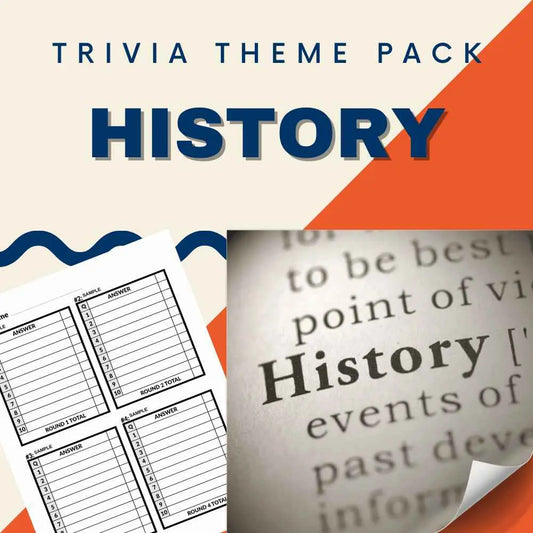
General Knowledge Trivia Night Theme Pack
The default workhorse for weekly trivia. 32 themed packs across history, geography, science, animals, and food. Print-ready PDFs, host scripts, ready-to-project PowerPoint files. Rotate weekly without writing your own questions.
The Tuesday morning reminder: the highest-ROI single message you'll send
If you only run one automated email per week, run this one. Sent at 9:30 a.m. on the day of trivia, segmented to your trivia list. Subject lines that work:
- "Trivia is tonight. Save your usual table?"
- "6:45 p.m. tonight. The category teaser is below."
- "[Captain name], your team won 3 weeks ago. They're back tonight."
Body template that tests well:
Hey [first name],

Trivia kicks off tonight at 7:00. Doors open at 6:00, teams form by 6:45.

Tonight's bonus round: [theme teaser, e.g. "Christmas Movies of the 90s"]

Reply to grab your usual table. First three teams to confirm get a free round of starters.

See you at 7,
[Owner name]
[Venue name]
The personal "reply to confirm" mechanic is the secret. It converts the email from a broadcast into a one-to-one conversation. Reply rate on this format runs 4-8% of opens, and a reservation confirmed by reply has a 95%+ show-rate versus 70-80% for a typical online reservation.
The SMS counterpart, sent at 4:30 p.m. the same day, runs short:
[First name] - Trivia at 7. Tonight's bonus: Christmas Movies. First 3 teams to text back get free apps.

Reply YES to lock in your table. - [Venue name]
What to send (and what to skip)
Trivia-list email and SMS works best when it's tight, specific, and immediately useful. The general restaurant newsletter playbook (long monthly updates, photos of new menu items, owner's blog posts) suppresses open rates on this list.
Send:
- Tuesday morning reminder with category teaser (every week)
- Day-of SMS reminder at 4:30 p.m. (every week)
- Winner spotlight email Wednesday morning ("Last night's winners: Team Tinsel Trolls. Photo below.")
- Special-event invitations for themed nights, holiday series, corporate-night spots
- Birthday-month SMS to team captains ("It's your birthday month. Bring 5 friends to trivia, your tab on the team total is on us up to $40.")
Skip:
- Generic monthly newsletters covering menu changes, holiday hours, and owner reflections
- Promotion of unrelated programming (brunch, wine flights, live music) on the trivia list
- Discount-driven SMS more than once a month
- "We miss you" win-back campaigns that read as guilt rather than invitation
- Anything longer than 90 words on email or 30 words on SMS
Segmentation: trivia regulars vs trivia tourists
Two segments inside the trivia list, treated differently.
Trivia regulars (visited 3+ times in 90 days): get the weekly Tuesday rhythm, the winner spotlight, and the early access to themed events. Light personalization (their team name, their captain's first name). High open rates, high response, low unsubscribe.
Trivia tourists (1-2 visits, then nothing in 30+ days): get a re-engagement automation. Three messages over four weeks: a "we miss you" with a low-friction reason to come back (free appetizer for the team), a themed event invite if one's coming up, and a final "should we keep you on the list?" win-back. This sequence reactivates 12-20% of dormant contacts on average and cleans the list of dead weight.
Both segments should hear from you on holiday programming. The segmentation is about cadence and content, not about excluding tourists from the seasonal pushes.
What good performance looks like at month six
If your trivia-night marketing layer is running cleanly, the metrics at month six should look roughly like this.
- List size: 600-1,200 trivia contacts (email + SMS)
- Tuesday morning email open rate: 32-45%
- SMS reply rate (table confirmation mechanic): 8-15%
- SMS unsubscribe rate per send: below 1.5%
- Same-day SMS-attributed walk-ins: 4-8 incremental teams (16-32 covers)
- Repeat-visit rate within 14 days for tourists who got a re-engagement: 12-20%
The cumulative effect is roughly 8-15 incremental covers per Tuesday driven by the email/SMS layer alone. At a $29 average ticket on a trivia night, that's $230-$435 per week in directly attributable lift, or $12,000-$22,000 annualized. The list is also a transferable asset if you ever sell the venue, which is the line item nobody talks about until they're at the closing table.